SunPower Solar Panels: Worth the Premium?
SunPower's Maxeon cells deliver the highest residential efficiency on the market, but at a price premium of 15 % to 25 %. Here is when that premium is justified and when it is not.
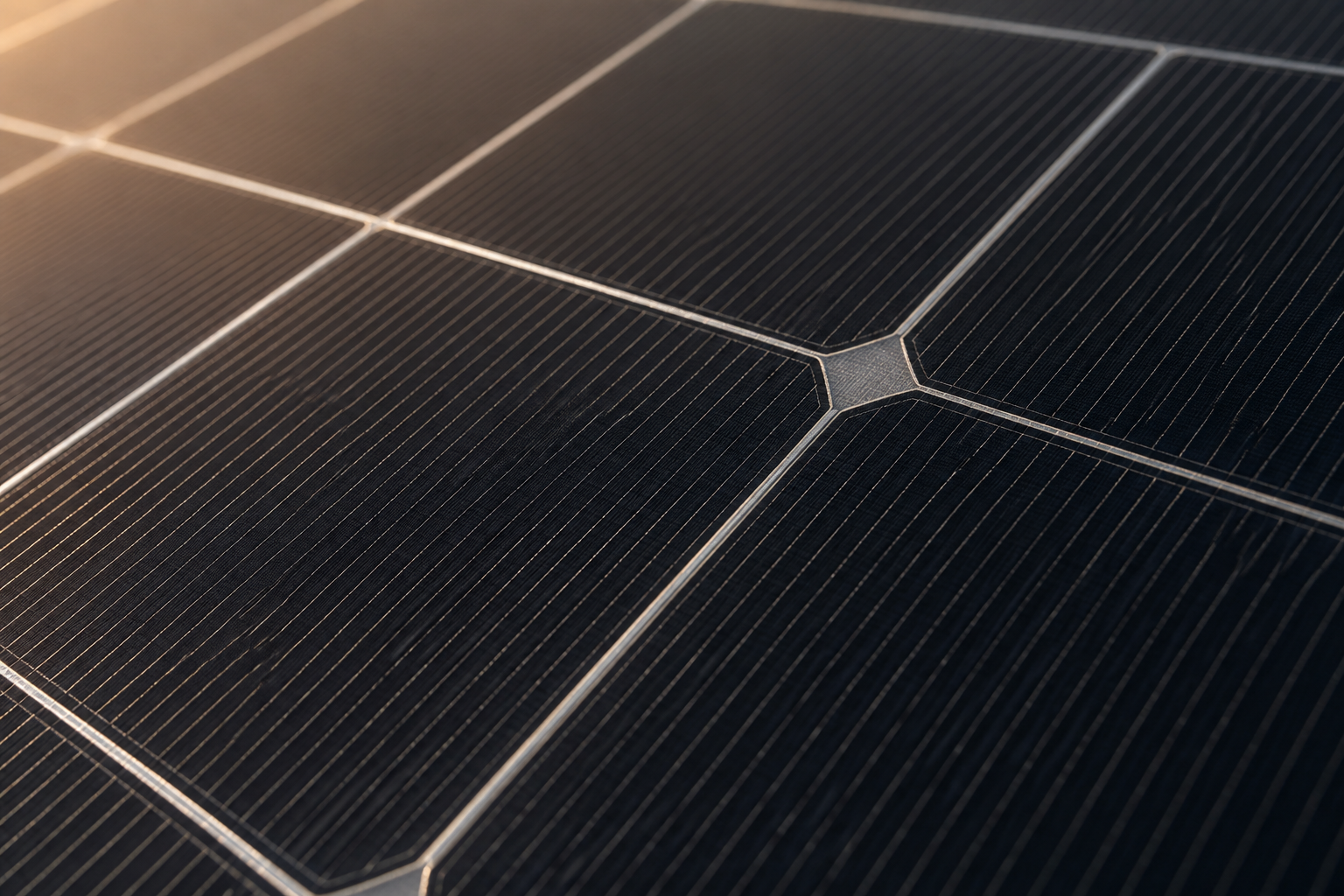
SunPower has been the premium residential solar brand in the US for over a decade, built on the Maxeon interdigitated back contact (IBC) cell architecture that consistently delivers the highest conversion efficiency available in mass-produced residential modules. In 2024, SunPower Corp (the US installer) filed for bankruptcy and restructured, while Maxeon Solar Technologies (the panel manufacturer, spun off in 2020) continues to produce the high-efficiency cells and modules. The "SunPower" brand you encounter in 2026 may refer to either legacy inventory, Maxeon-manufactured panels sold through new dealer networks, or rebranded products depending on your market.
Despite the corporate upheaval, the technology itself remains best-in-class. Maxeon 7 panels ship at 23.5 % to 24.1 % module efficiency, roughly 2 to 3 percentage points above mainstream PERC competitors. On a space-constrained roof, that efficiency advantage translates directly into additional system capacity that mainstream panels physically cannot deliver. The question homeowners face is whether the 15 % to 25 % price premium over strong mid-tier alternatives like REC Alpha, Canadian Solar HiHero, or LONGi Hi-MO 7 justifies the incremental production, especially given the warranty turbulence from SunPower's restructuring.
SunPower / Maxeon overview
The current landscape: Maxeon Solar Technologies (headquartered in Singapore, publicly traded) manufactures the high-efficiency IBC cells and sells modules globally. In the US market, post-restructuring SunPower panels are sold through a network of certified installers rather than a captive direct sales force. Warranty obligations from pre-bankruptcy installations are handled through the restructuring agreement, with coverage generally honored but service response times reported as slower than before. New purchases carry Maxeon's 40-year warranty directly.
Want research like this in your inbox? Become a subscriber, free, no sales pitch.
Become a subscriber →Maxeon cell technology
Standard solar cells place metal busbars on the front surface to collect current. These busbars block 2 % to 4 % of incoming light. Maxeon's IBC (Interdigitated Back Contact) design moves all electrical contacts to the rear of the cell, eliminating front-side shading entirely. The cell surface is a uniform, uninterrupted dark expanse that absorbs light across its entire area. This design also enables a thicker copper foundation layer on the back that resists the corrosion-induced degradation that affects conventional aluminum-backed cells.
The result is a cell that converts more light to electricity (higher efficiency), degrades more slowly (the copper foundation is more stable than screen-printed silver contacts), and handles thermal cycling better (the solid copper back acts as a stress relief layer). These advantages compound over 25+ years: a Maxeon panel retaining 92 % of output at year 25 will have produced meaningfully more lifetime energy than a conventional PERC panel retaining 84 % at the same age, even if both started at similar wattage ratings.
2026 specs and efficiency
- Maxeon 7 (residential): 430 to 450 W, 23.5 % to 24.1 % efficiency, all-black aesthetic.
- Temperature coefficient: -0.27 %/°C (best-in-class, compared to -0.34 % for typical PERC).
- Year-1 degradation: 1 % (industry standard first-year burn-in).
- Annual degradation thereafter: 0.25 % per year (vs 0.4 % to 0.55 % for mainstream PERC).
- Warranty output at year 40: 88.25 % of rated power (40-year warranty).
- Dimensions: approximately 1,879 x 1,045 mm (similar footprint to standard 72-cell panels).
Pricing and value
Maxeon panels command a module-level premium of $0.10 to $0.20 per watt over mainstream Tier 1 alternatives. At the installed system level, SunPower/Maxeon systems typically quote at $2.80 to $3.40 per watt before incentives, compared to $2.40 to $2.90 for equivalent-size systems using mainstream panels. On a 7 kW system, the total premium is $2,000 to $3,500, which you recover through higher annual production and slower degradation over the system's lifetime.
The payback math on the premium is straightforward: if Maxeon panels produce 3 % more energy per year (from higher efficiency and lower temperature losses) and degrade 0.2 % per year slower, the cumulative production advantage over 25 years is roughly 8 % to 12 % more total energy. At average US electricity rates, that translates to $3,000 to $5,000 in additional lifetime savings, more than covering the upfront premium on most systems. The catch is that this requires the panels to actually last 25+ years and the warranty to be honored, which brings us to the restructuring question.

Warranty coverage
New Maxeon panels carry a 40-year combined product and performance warranty, the longest in the residential solar industry. The warranty guarantees at least 88.25 % output at year 40, implying confidence in the IBC cell's long-term stability. For comparison, most competitors offer 25-year warranties with 80 % to 84.8 % end-of-life guarantees. The warranty is backed by Maxeon Solar Technologies directly, not by a local installer, which provides stability as long as Maxeon remains solvent.
For existing SunPower customers with pre-bankruptcy installations, warranty service has been reported as slower but still functional. Replacement panels and service calls are being honored through authorized service partners, though response times of 4 to 8 weeks for non-critical issues are common. New purchases from 2024 onward carry clean Maxeon warranties without the legacy complications.
Is it worth the premium
SunPower/Maxeon panels are worth the premium in three specific scenarios: (1) your roof space is constrained and you need maximum watts per square foot to reach your system target, (2) you plan to own the home for 20+ years and want to maximize lifetime energy production, or (3) you value the 40-year warranty and slower degradation rate for long-term asset protection. If you have a large, unobstructed roof where mainstream panels can easily hit your target system size, the premium delivers diminishing returns because the extra efficiency does not unlock additional capacity.
The corporate restructuring introduces a modest risk factor that did not exist five years ago. Maxeon is publicly traded and continues manufacturing, but the residential solar industry has seen warranty holders (Solyndra, Suniva, early LG) exit the market before. Diversifying with a strong installer warranty alongside the manufacturer warranty provides a safety net. For most homeowners with adequate roof space, mid-tier panels from REC, Canadian Solar, or LONGi deliver 90 % of the performance at 75 % of the price.
Small roof + long ownership horizon + high local electricity rates = premium panels pay back. Large roof + near-term sale possibility + moderate rates = mainstream panels win. Run the 25-year production model with actual degradation rates, not just year-one specs. See our efficiency guide for how to compare panels on equal terms.
Common questions
Are SunPower panels still available after the bankruptcy?+
Yes. Maxeon Solar Technologies continues manufacturing the high-efficiency IBC panels. In the US, they are sold through a network of certified installers. The SunPower brand name may or may not be used depending on market and dealer, but the Maxeon cell technology is unchanged.
How much more do SunPower panels cost?+
Typically 15 % to 25 % more than mainstream Tier 1 alternatives at the installed system level. On a 7 kW system, expect to pay $2,000 to $3,500 more before incentives. The premium is partially offset by higher production and a 40-year warranty.
Do SunPower panels really last 40 years?+
The warranty period is 40 years with 88.25 % guaranteed output. The IBC cell design has shown slower degradation than conventional architectures in field studies. Whether any solar company will honor a warranty claim in 2066 is inherently uncertain, but the technology foundation is sound.
Become a subscriber
Free updates on costs, incentives and panel tech, written for homeowners, not sales teams.
Become a subscriber →