Solar Panel Cleaning: DIY vs Professional
Dirty panels lose 5 % to 25 % output depending on your climate. Here is how to decide between grabbing a hose yourself or hiring a crew, and what each approach costs.
Rain handles most of the cleaning work for rooftop solar panels in temperate climates. A moderate rainfall of half an inch or more washes away loose dust and pollen effectively, restoring panels to within a few percent of clean output. But rain does not remove sticky residues: bird droppings, tree sap, pollen buildup in dry spring months, or mineral deposits from hard water in arid regions. In dry, dusty climates like the Southwest US, panels can lose 15 % to 25 % of rated output over a summer without intervention. Even in wetter climates, localized soiling from bird activity or nearby construction can create hotspots that degrade individual cells.
The question is not whether cleaning matters, it is whether the cost of cleaning exceeds the value of recovered production. For a 7 kW system producing $1,200 per year in bill savings, a 15 % soiling loss represents $180 in forfeited energy. If professional cleaning costs $150 per visit, the math barely works for one annual cleaning. If you can safely DIY with a garden hose, the economics are unambiguous. Your climate, roof accessibility, and comfort with ladders determine the right approach.
How dirt affects output
Soiling losses depend on particle type, accumulation rate, and panel tilt. Flat-mounted panels accumulate more debris because rain does not sheet off as effectively. Steep panels self-clean better but still collect bird droppings and sap. Research from UC San Diego found that panels in Southern California lost an average of 7.4 % of output after 145 days without rain. In dusty agricultural areas, losses can reach 20 % to 30 % in a single dry season.
Localized soiling is more damaging than uniform dust. A single bird dropping covering one cell can reduce that cell's output to near zero, and in a series-connected string, the weakest cell limits the entire string. Microinverters and power optimizers mitigate string-level impact but cannot recover the energy lost from the blocked cell itself. Regular visual inspection from the ground with binoculars can identify problem spots before they compound.
Want research like this in your inbox? Become a subscriber, free, no sales pitch.
Become a subscriber →How often to clean
- Rainy climates (Pacific NW, Northeast): once per year or never, rain does most of the work.
- Moderate climates (Mid-Atlantic, Southeast): once or twice per year, typically spring after pollen season.
- Dry and dusty (Southwest, Central Valley): two to four times per year or after extended dry spells.
- Under trees or near agriculture: monthly inspection, cleaning as needed when droppings or sap accumulate.
Monitor your system's production data. A sudden drop that does not correlate with weather often indicates soiling, a failed optimizer, or a wiring issue. Most inverter monitoring apps show daily and weekly production trends that make soiling losses visible within a few days of accumulation.
DIY cleaning method
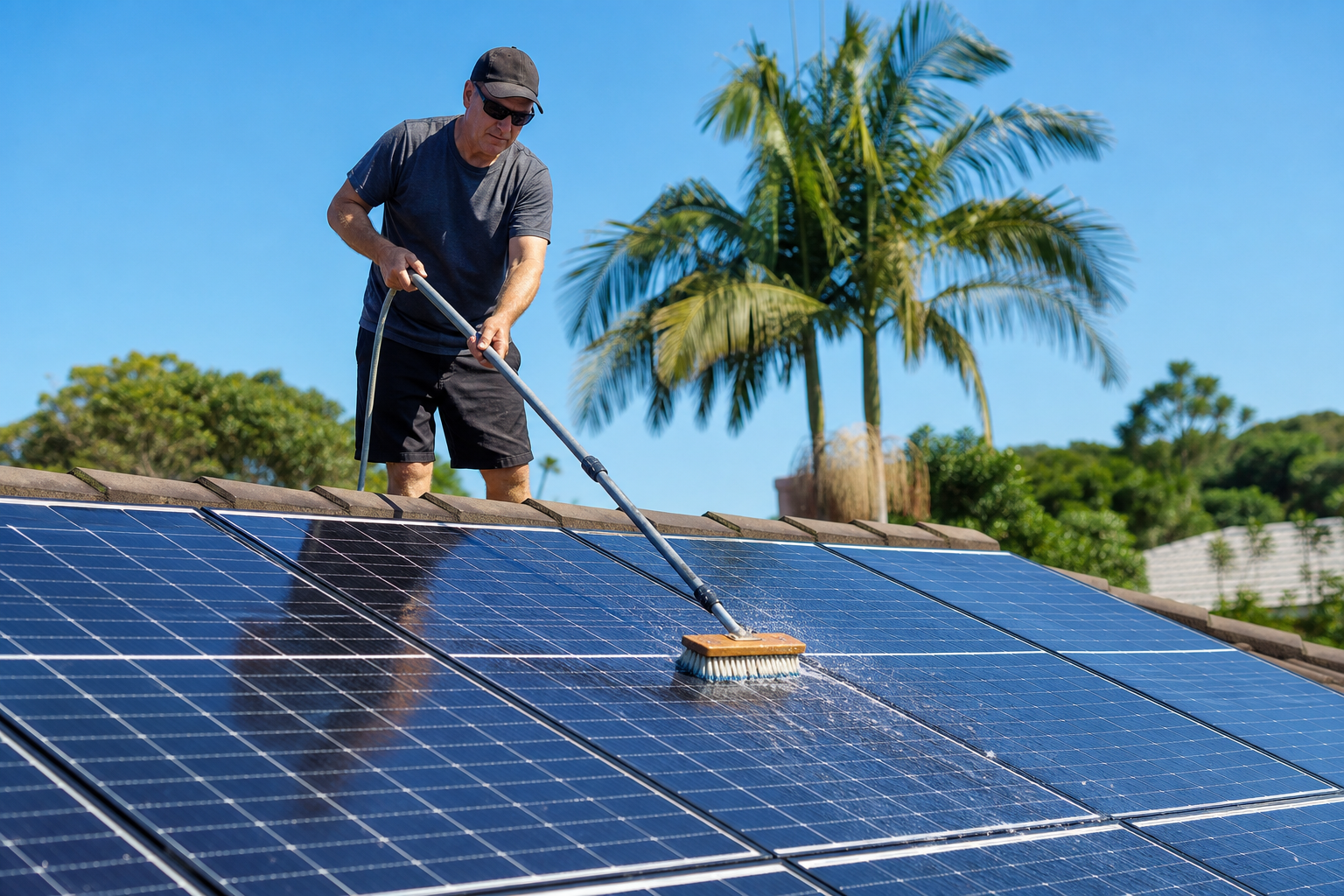
The safest and most effective DIY approach uses a garden hose with a spray nozzle from the ground, no ladder required. Early morning is best because panels are cool and dew has softened debris. Spraying cold water on a hot panel in midday can cause thermal shock and, in rare cases, microcracking of the tempered glass. If ground-level hose reach is insufficient, a telescoping pole with a soft brush attachment (sold specifically for solar panels) lets you reach second-story arrays without climbing on the roof.
Step-by-step DIY cleaning
- 1. Shut down the system if your inverter manual recommends it (not always required for rinsing, but safest for physical contact cleaning).
- 2. Rinse with plain water using a garden hose. Avoid pressure washers, they can damage seals and frames.
- 3. Scrub stubborn spots with a soft brush or sponge on an extension pole. Use only water or a few drops of dish soap.
- 4. Final rinse with clean water to remove soap residue.
- 5. Inspect from the ground for any remaining droppings or damage.
Professional cleaning
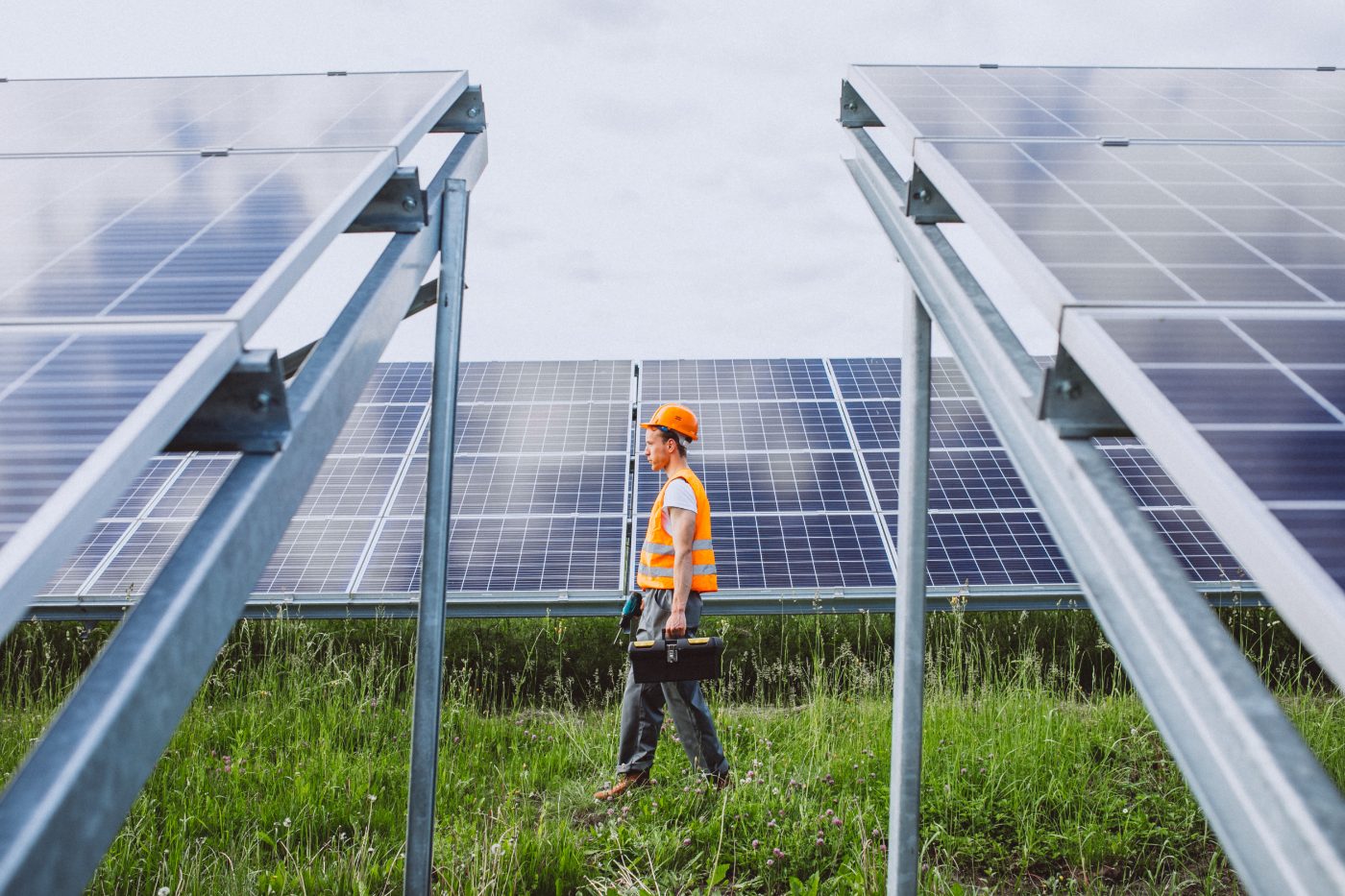
Professional solar panel cleaning services use deionized water (which dries spot-free without mineral deposits), soft-bristle rotating brushes, and safety harnesses for roof access. A typical residential cleaning takes 30 to 60 minutes for a 20 to 30 panel system. Professionals also perform a visual inspection for cracked glass, loose wiring, pest nesting, and frame corrosion, catching issues that might otherwise go unnoticed until they affect production significantly.
Hiring a professional makes sense when roof access is dangerous (steep pitch, three stories, fragile tile), when you have a large system where DIY would take hours, or when you want the inspection value alongside the cleaning. Some solar maintenance companies offer annual contracts that bundle cleaning with electrical inspection and thermal imaging for $200 to $400 per year.
Cost comparison
- DIY (hose from ground): free, requires only time and a garden hose.
- DIY (telescoping brush): $40 to $80 one-time cost for the pole and brush attachment.
- Professional single visit: $100 to $250 depending on system size and roof difficulty.
- Professional annual contract: $150 to $400 per year, usually includes two cleanings plus inspection.
The break-even point for professional cleaning is when recovered production value exceeds the service cost. On a 10 kW system in a dusty climate losing 15 % ($270/year) to soiling, a $150 cleaning session that restores full output pays for itself in recovered energy within 6 to 7 months. In a rainy climate where losses are only 3 % ($45/year), professional cleaning is a luxury, not an investment.
What to avoid
- Pressure washers: high-pressure water can breach panel seals and damage anti-reflective coatings.
- Abrasive materials: scouring pads, steel wool, or rough brushes scratch the glass permanently, reducing transmission.
- Harsh chemicals: ammonia, bleach, and solvent-based cleaners can degrade frame seals and backsheet materials.
- Hot-panel cleaning: spraying cold water on panels exceeding 50 °C risks thermal stress fractures.
- Walking on panels: never step on solar panels. The glass may not break visibly but internal cell cracking destroys output permanently.
Falls from residential roofs cause thousands of injuries annually. If your panels are on a steep or high roof, the $150 for a professional crew is cheap insurance compared to an ER visit. Use ground-level methods when possible, and never climb a wet roof. See our roof requirements guide for more on safe roof access.
Common questions
How often should I clean my solar panels?+
In rainy climates, once a year or not at all. In dry or dusty areas, two to four times per year. Monitor your production data for unexplained dips that suggest soiling, and clean when output drops more than 5 % without a weather explanation.
Can I use a pressure washer on solar panels?+
No. Pressure washers can damage panel seals, strip anti-reflective coatings, and force water into junction boxes. Use a standard garden hose or low-pressure soft brush system designed for solar panels.
Is it worth paying for professional solar panel cleaning?+
It depends on your soiling level and system size. In dusty climates with 10 % or more soiling loss, professional cleaning typically pays for itself in recovered energy. In rainy areas with minimal soiling, DIY rinsing is sufficient and professional service is not cost-justified.
Become a subscriber
Free updates on costs, incentives and panel tech, written for homeowners, not sales teams.
Become a subscriber →