Enphase Microinverters vs String Inverters
Module-level power electronics versus a single central box. The right answer depends on your roof complexity, shade exposure, budget, and how much per-panel monitoring matters to you.
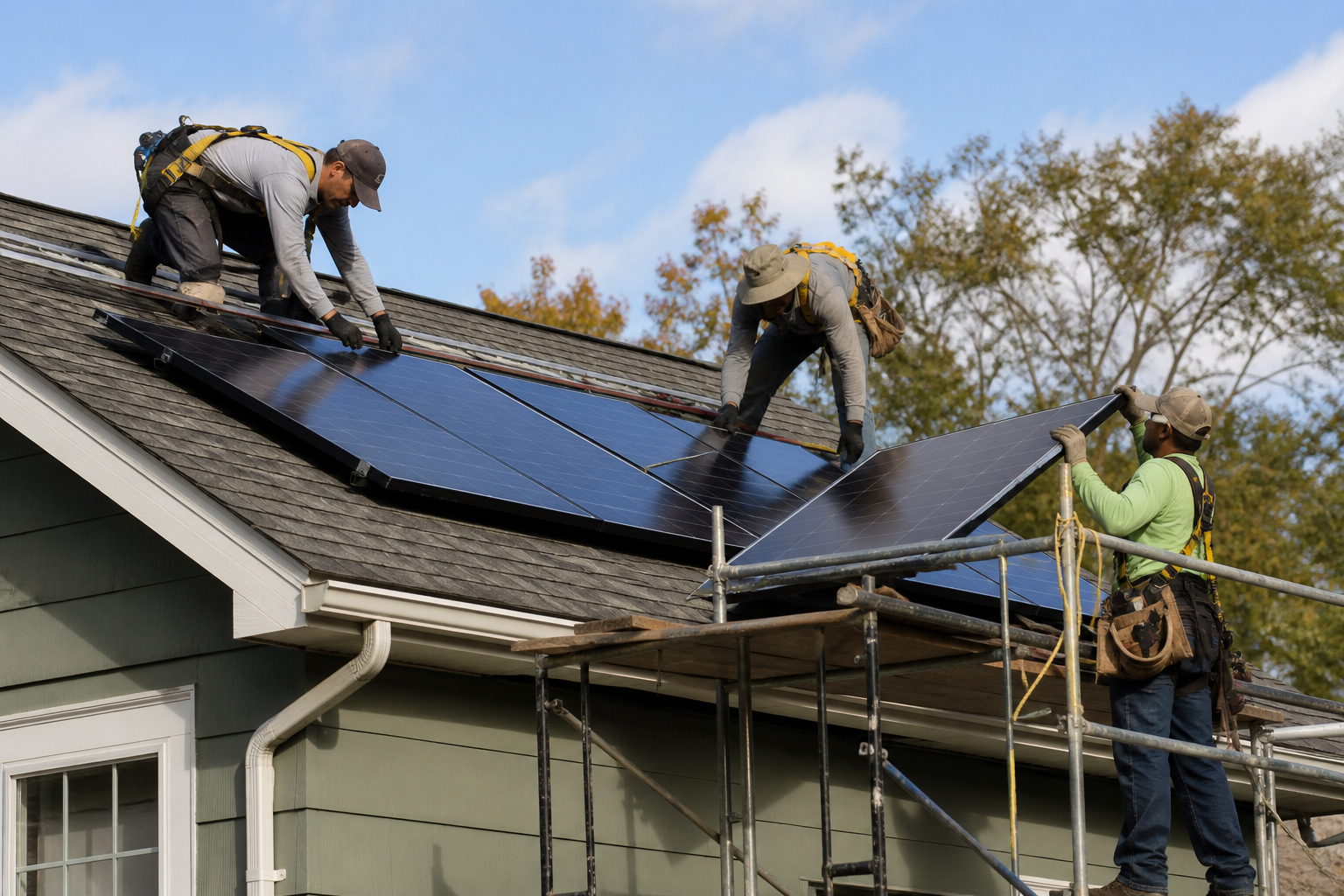
The inverter converts DC electricity from your solar panels into AC electricity your home uses. String inverters handle this conversion in a single centralized unit, wiring panels together in series strings. Enphase microinverters place a small inverter on the back of each individual panel, performing the conversion at the module level. A third option, DC power optimizers (SolarEdge), pairs per-panel DC electronics with a central string inverter. Each topology has meaningful implications for system cost, shade tolerance, monitoring granularity, reliability, and future expandability.
Enphase is the dominant microinverter brand in the US, powering roughly 50 % of residential installations as of 2026. Their IQ8 series microinverters offer per-panel maximum power point tracking (MPPT), module-level monitoring, and the ability to produce limited power during grid outages without a battery (Sunlight Backup feature). String inverters, led by brands like SMA, Fronius, and Tesla, remain popular for their lower cost and simpler installation on uniform, shade-free roofs. Understanding the trade-offs helps you evaluate installer recommendations rather than simply accepting whatever they stock.
How each topology works
String inverters
Panels are wired in series strings of 8 to 14 modules. The combined DC voltage feeds a single inverter box (typically wall-mounted near the main electrical panel or in the garage). The inverter performs MPPT for the entire string, finding the voltage/current operating point that maximizes total power. If one panel in the string underperforms due to shade or soiling, the entire string output drops because current must flow through every panel in series. Modern string inverters have two or more MPPT inputs, allowing separate strings on different roof planes to operate independently.
Want research like this in your inbox? Become a subscriber, free, no sales pitch.
Become a subscriber →Enphase microinverters
Each panel gets its own dedicated inverter (roughly the size of a paperback book) mounted to the racking rail directly behind the module. The microinverter converts DC to AC immediately, and AC wiring runs in parallel from each unit to a combiner or directly to the breaker panel. Because each panel operates independently, shade on one module has zero electrical impact on its neighbors. The IQ8 series operates at 240 VAC and communicates wirelessly with the Enphase IQ Gateway for monitoring and grid management.
Shade performance
This is the primary technical differentiator. On a string inverter system, shade on one panel forces the entire string to the shaded panel's current limit. A single panel losing 50 % of its output can reduce the whole string by 30 % or more because the weakest link constrains the chain. Power optimizers (SolarEdge) mitigate this by performing per-panel MPPT in DC before the central inverter, reclaiming most of the lost energy from unshaded panels.
With Enphase microinverters, each panel harvests its own maximum independently. A shaded panel produces whatever it can, and every other panel continues at full output unaffected. On roofs with partial shade from dormers, chimneys, vents, or nearby trees, microinverters typically recover 5 % to 25 % more annual energy compared to an unoptimized string system. The advantage shrinks to near zero on a clean, shade-free south-facing plane.
Cost comparison
- String inverter (SMA, Fronius): $0.15 to $0.25 per watt, or $1,000 to $1,800 for a 7 kW system.
- Enphase microinverters (IQ8+): $0.30 to $0.45 per watt, or $2,100 to $3,150 for a 7 kW system.
- SolarEdge optimizers + inverter: $0.25 to $0.35 per watt, or $1,750 to $2,450 for a 7 kW system.
The Enphase premium over a basic string inverter is roughly $1,000 to $1,500 on a typical residential system. Whether that premium pays back depends on your shade conditions: on a complex roof losing 15 % to annual shade, microinverters recover enough extra energy to pay back the difference within 4 to 6 years. On a shade-free roof, the premium buys monitoring granularity and longer warranty coverage but does not recover meaningfully more energy.
Lifespan and reliability
String inverters typically carry 10 to 12 year warranties (extendable to 20 to 25 years for a fee) and have a proven track record spanning decades. They are relatively easy to replace since they are accessible on a wall. Failure means the whole system is down until the unit is swapped, typically one to five days with a responsive installer. Enphase microinverters carry a 25-year warranty out of the box, matching the panel lifespan. Individual unit failure only takes one panel offline; the rest of the system continues producing. However, accessing a failed microinverter requires removing the panel above it, which means a truck roll and roof work for each repair.
Field data from the last decade shows microinverter failure rates of roughly 0.05 % per unit per year. On a 20-panel system over 25 years, you might expect one or two microinverter replacements, each costing $150 to $300 for the service call since the hardware itself is under warranty. String inverters have roughly a 50 % chance of needing replacement once during a 25-year system life, at a cost of $1,500 to $2,500 for the unit plus installation.
Monitoring differences
Enphase provides per-panel production data through the Enlighten monitoring platform. You can see exactly how much each individual module produces every 15 minutes, making it easy to identify a failing panel, shading pattern, or soiling issue. String inverters provide only string-level data: you see total system output but cannot isolate individual panels without additional hardware. SolarEdge optimizers offer per-panel monitoring similar to Enphase but within the SolarEdge ecosystem.
For most homeowners, system-level monitoring is sufficient. You notice a problem when total output drops significantly. Per-panel monitoring is valuable on large or complex systems where diagnosing which of 30 panels is underperforming would otherwise require a truck roll and physical testing. If you enjoy data and want maximum visibility into system health, microinverters or optimizers deliver that without additional equipment.
Decision framework
- Choose Enphase microinverters when: your roof has shade, multiple orientations, dormers, or you want per-panel monitoring and a 25-year warranty without extensions.
- Choose a string inverter when: you have a single, shade-free roof plane, want the lowest upfront cost, and are comfortable with a replacement event around year 12.
- Choose SolarEdge optimizers when: you want per-panel MPPT and monitoring at a lower price than full microinverters, and your installer stocks the platform.
Many installers stock only one inverter platform because it simplifies training, inventory, and warranty claims. If your installer only offers string inverters but your roof has significant shade, get a second quote from an Enphase-certified installer. The reverse applies too: if you have a clean roof and an installer pushes microinverters, ask whether a string inverter would save money without sacrificing production. See our Tesla review for a string-inverter-first approach.
Common questions
Are Enphase microinverters worth the extra cost?+
On shaded or complex roofs, yes. The extra $1,000 to $1,500 pays back through 5 % to 25 % more energy production and a 25-year warranty. On shade-free single-plane roofs, the production advantage is minimal, and a string inverter delivers similar lifetime economics at lower upfront cost.
What happens if one Enphase microinverter fails?+
Only the one panel attached to that microinverter stops producing. The rest of the system continues at full output. Replacement involves removing the panel, swapping the unit (covered under warranty), and remounting. Most service calls are completed in one to two hours.
Can I mix microinverters and string inverters?+
Not on the same string, but you can have separate subsystems. Some installations use a string inverter for a large, unshaded south array and add Enphase microinverters on a smaller, shaded east section. This is uncommon because it adds complexity, but technically possible with proper design.
Become a subscriber
Free updates on costs, incentives and panel tech, written for homeowners, not sales teams.
Become a subscriber →