How solar panels work: a homeowner's guide
From sunlight on your roof to kilowatt-hours on your bill, the path of electricity, without the installer jargon.
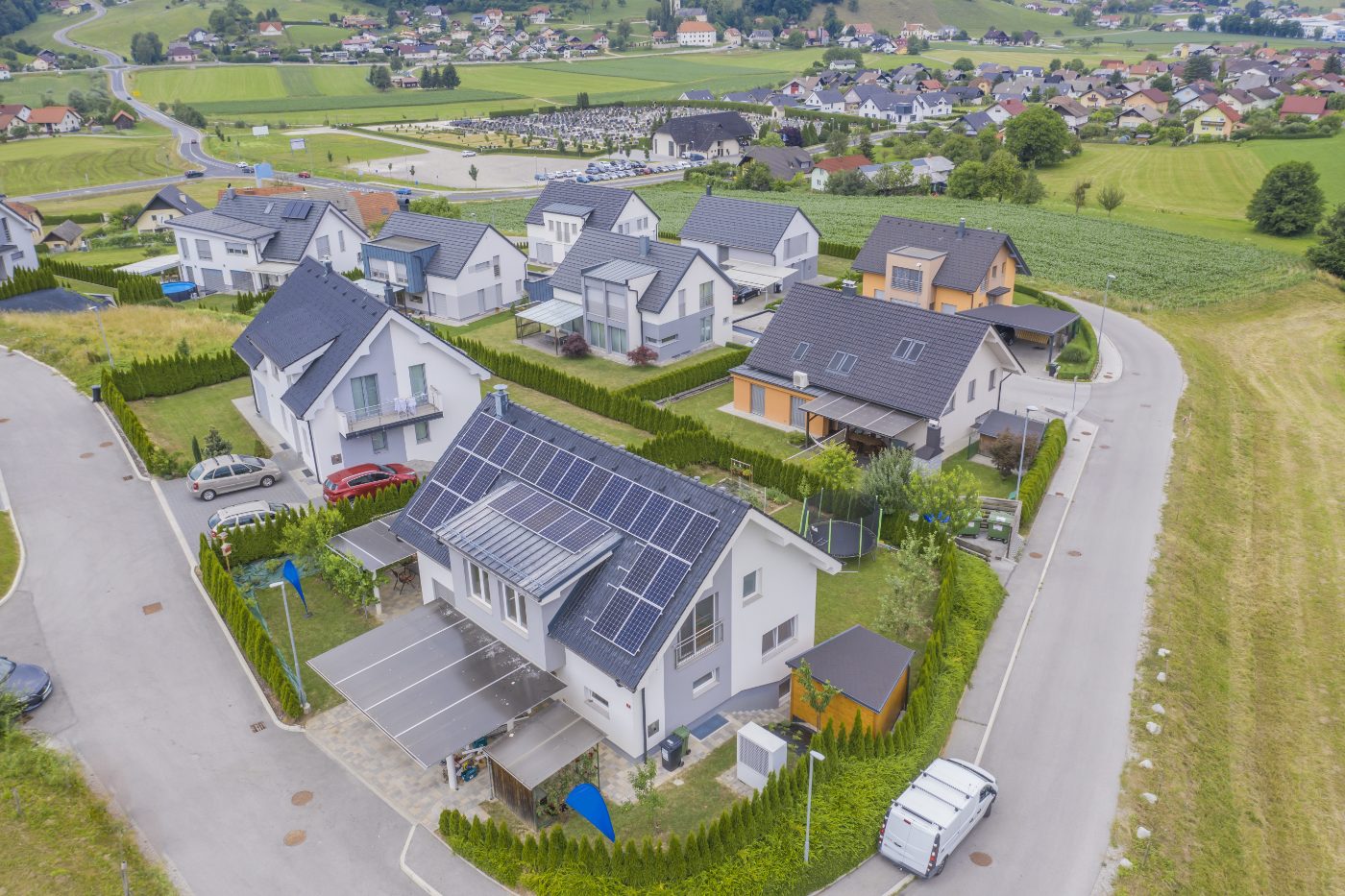
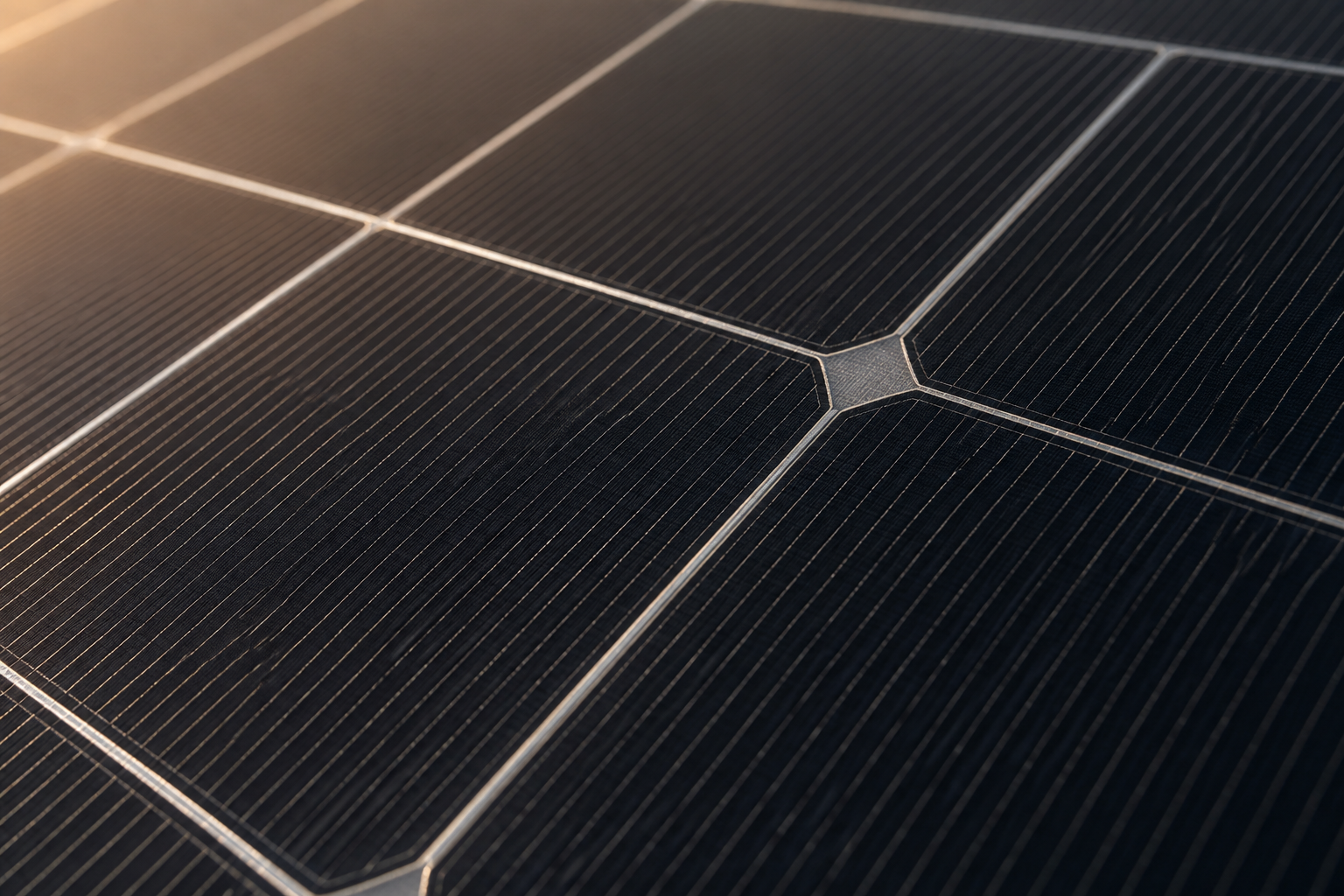
A solar panel is, at its core, a sandwich of silicon cells laminated behind tempered glass. When photons from sunlight strike the semiconductor material, they knock electrons out of their atomic bonds and create a flow of direct current. Metal contacts printed across each cell collect that current and route it through wiring to your electrical system. Nothing combusts, nothing spins, and the only moving part in most residential setups is a cooling fan inside certain inverter models. The entire conversion happens silently and continuously whenever light reaches the surface.
Your house and the grid run on alternating current, so an inverter sits between the array and your breaker panel to perform the DC-to-AC conversion. The inverter feeds your loads first, lights, HVAC, appliances, and any surplus travels out to the grid under your utility's interconnection agreement. At night or under heavy load, you pull electricity back from the grid exactly like any other customer. Understanding this loop is the foundation for evaluating system size, battery decisions, and whether net metering still works in your market.
Sunlight to electricity
The photovoltaic effect was first observed in 1839, but practical silicon cells didn't arrive until the 1950s at Bell Labs. The principle is straightforward: a photon with enough energy dislodges an electron from the silicon lattice, creating a free carrier. An internal electric field at the junction between positively and negatively doped silicon layers drives that carrier through an external circuit. The current produced is proportional to the number of photons absorbed, which is why clear midday sun produces the highest output and overcast skies produce less, but not zero.
Cell efficiency, the share of incoming solar energy converted to electricity, typically sits between 20 % and 23 % for residential monocrystalline modules shipping in 2026. Laboratory cells have exceeded 26 %, but commercial products trade a few points of peak efficiency for manufacturing yield and cost control. Higher efficiency means more watts per square foot of roof, which matters on small or heavily shaded roofs and matters less when you have a large, clear south-facing surface to work with.
Inside a silicon cell
A standard residential module contains 60 or 72 cells wired in series. Each cell is a wafer of crystalline silicon roughly 0.2 mm thick, coated with an anti-reflective layer that gives panels their characteristic dark blue or black appearance. Busbars, thin metal strips, run across the cell face to collect current without blocking too much light. Half-cut cell designs, now common, split each wafer to reduce resistive losses and improve shade tolerance. These design choices influence real-world yield more than headline wattage alone.
The glass front is tempered to survive hail up to roughly one-inch diameter at terminal velocity, per IEC 61215 testing. Behind the cells sits a polymer backsheet or, in glass-glass modules, a second pane. The frame is anodized aluminum. Altogether, a residential panel weighs around 40 to 50 pounds and measures about 3.5 by 5.5 feet. When your installer talks about "racking," they mean the aluminum rail system that bolts to your roof structure and holds these modules at the correct angle and spacing for airflow.
Want research like this in your inbox? Become a subscriber, free, no sales pitch.
Become a subscriber →What the inverter does
String inverters handle an entire roof plane, or the whole array, on one circuit. They are the least expensive per watt and the simplest to service because a single box sits near the main panel. The trade-off is that shade on one module can pull down the output of every module on that string. Microinverters solve that problem by putting a tiny inverter behind each panel, so each module operates independently. Power optimizers are a middle path: per-panel DC optimizers feed a central string inverter, offering module-level monitoring without the cost of full micro systems.
Which topology is best depends on your roof. A single, unshaded south plane is a fine candidate for a string inverter. A complex roof with dormers, chimneys, and partial shade benefits from micros or optimizers. Installer preference also plays a role, crews who stock and warranty one brand will push it, and switching brands mid-project is usually impractical. Ask your installer to justify the choice in writing, including shade analysis and monitoring capability.
Choosing an inverter type
- String inverter: lowest cost, easiest to replace, but shade-sensitive.
- Microinverter: module-level independence, per-panel monitoring, higher upfront cost.
- DC optimizer + string inverter: shade mitigation with centralized conversion, moderate price.
- Hybrid / battery-ready inverter: built-in charge controller for future storage, growing in popularity.
Net metering and export
Net metering lets you bank surplus kilowatt-hours on the grid and draw them back later, essentially using the grid as a free battery. Under full retail net metering, every exported kWh offsets a purchased kWh at the same rate. This made solar economics simple for years: overproduce by day, consume the credit at night, and your bill shrinks to a minimum connection charge. The catch is that utilities across the country are restructuring these programs, and the replacement rules vary wildly.
In states that have moved to reduced export rates or time-of-use netting, midday surplus is worth less than evening consumption. That shift changes system design: you might size the array to match daytime load rather than total annual usage, or add a battery to shift energy into the expensive evening window. Before you sign a contract, get your utility's current export tariff in writing and confirm whether it's grandfathered for the life of the system or subject to future revision.
What shows up on your bill
You still receive a utility bill after going solar. The bill reflects any electricity you purchased from the grid minus credits for what you exported. Fixed charges, meter fees, demand charges in some territories, remain regardless of solar production. In months where production exceeds consumption, you may accumulate a credit balance that rolls forward. Some utilities settle annually, paying out remaining credits at a wholesale or avoided-cost rate that is lower than retail. Understanding these mechanics prevents the sticker shock of a non-zero bill after installation.
How big a system you need
A typical US home installs around 7.2 kW, which translates to roughly 16 to 20 panels depending on module wattage. The sizing formula is straightforward: take your annual electricity consumption in kilowatt-hours, divide by the local production factor (available from PVWatts or your installer's design software), and divide again by the wattage of the module being proposed. The result is the number of panels. Rounding up a panel or two is fine; doubling the system to "bank credits" often backfires under new export rules.
- Check your last 12 months of utility bills for total kWh consumed.
- Ask for the production estimate in kWh/year, not just "offset percentage."
- Factor in planned changes: EV charging, heat pump, pool heater.
- On small roofs, higher-efficiency panels let you fit more capacity.
How long the technology lasts
Most residential panels carry a 25-year performance warranty guaranteeing at least 80 % to 85 % of rated output at the end of that period. Real-world degradation is typically 0.3 % to 0.5 % per year, meaning a panel producing 400 W in year one still puts out roughly 350 W in year 25. Inverters have shorter lifespans, string inverters often need replacement around years 10 to 15, while microinverters are warrantied for 25 years but are harder to access if they fail. Budget for at least one inverter event in your ROI calculation.
Panels make DC. The inverter makes AC. Your bill reflects what you still buy from the utility after self-consumption and export credits. If someone can't explain those three facts about your proposal, keep shopping. See our mono vs poly guide and 2026 cost article for deeper dives.
Common questions
Do solar panels work on cloudy days?+
Yes, at reduced output. Diffuse light still generates power, typically 10 % to 25 % of rated capacity under heavy overcast. Clear sun produces peak output, but annual production models already account for your region's average cloud cover.
Will I be off-grid?+
Almost never with a standard grid-tied system. Without a battery sized for full backup, the array shuts down during a grid outage for safety (anti-islanding). A battery with an automatic transfer switch can keep critical loads running.
How long do panels last?+
Most residential warranties cover 25 years of performance, with gradual degradation around 0.3, 0.5 % per year. Many panels continue producing useful power well beyond the warranty period, though output will be lower than nameplate.
Become a subscriber
Free updates on costs, incentives and panel tech, written for homeowners, not sales teams.
Become a subscriber →