Solar battery comparison: Tesla Powerwall vs others
Capacity, backup behavior and price, when storage changes the math and when it doesn't.
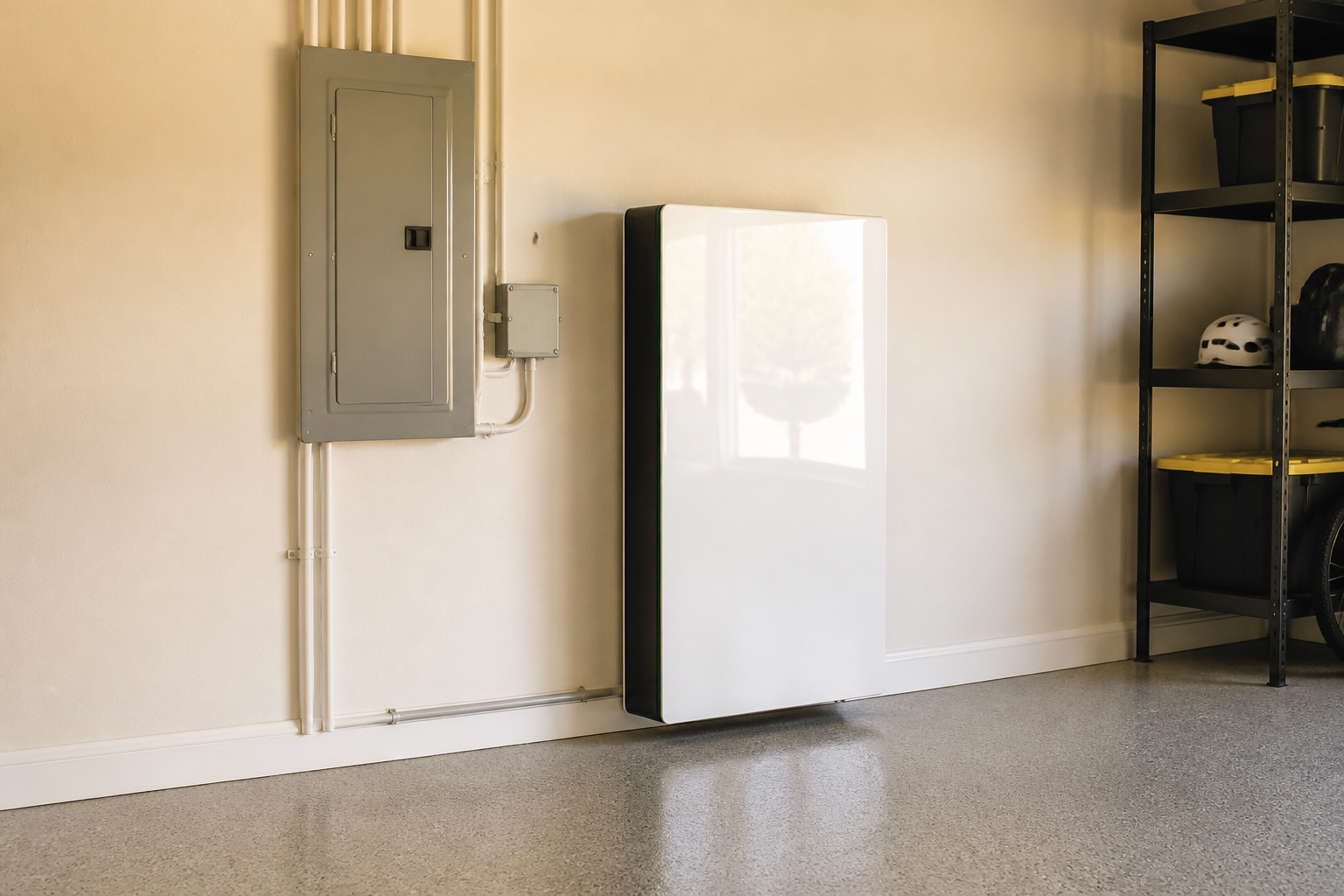
A home battery stores solar energy generated during the day for use in the evening, overnight, or during grid outages. On paper, the concept is elegant, harvest free sunlight, store it, and eliminate your dependence on grid electricity. In practice, the economics are more nuanced. In markets with full retail net metering, a battery often lengthens payback without meaningfully shrinking your bill because the grid already acts as a free, unlimited-capacity battery. Where export credits are poor, time-of-use rate differentials are large, or outages are common, the value proposition flips dramatically.
The battery market has matured rapidly since 2020. Multiple manufacturers now offer reliable residential storage products with 10- to 15-year warranties, and prices have declined steadily. But the category is still rife with misleading marketing, capacity numbers that conflate total and usable energy, power ratings that don't distinguish continuous from peak output, and "whole-home backup" claims that quietly assume you'll cut your loads to a fraction of normal usage. Understanding the real specs behind the marketing is essential to making a sound investment.
When a battery pays
A battery adds financial value in specific scenarios. First, time-of-use (TOU) arbitrage: if your utility charges significantly more for evening electricity than midday electricity, storing cheap solar for expensive evening consumption creates a daily savings cycle. Second, weak export rates: if your utility pays you less than retail for exported solar, storing that energy and using it yourself captures the full retail value. Third, demand charge reduction: some rate structures charge based on your peak 15-minute demand, and a battery can shave those peaks.
Beyond economics, batteries provide resilience value. If you work from home, have medical equipment that requires uninterrupted power, or live in an area prone to wildfire-related public safety power shutoffs, the ability to keep critical loads running during a grid outage has real value that doesn't appear in a simple payback calculation. How much that resilience is worth is a personal judgment, not a spreadsheet exercise.
Want research like this in your inbox? Become a subscriber, free, no sales pitch.
Become a subscriber →Specs that matter
Battery marketing leads with total capacity in kilowatt-hours, but usable capacity is what you can actually draw. Most lithium-ion batteries reserve 5 % to 10 % of total capacity to protect cell health, so a "13.5 kWh" battery may deliver 12 to 13 kWh of usable energy. Continuous power output in kilowatts determines what loads the battery can run simultaneously, a 5 kW continuous rating can handle lights, refrigerator, and a few circuits but won't start a central air conditioner that draws 4 to 6 kW on startup.
Round-trip efficiency measures how much of the energy you put into the battery you get back out. Most residential lithium-ion systems achieve 88 % to 92 % round-trip efficiency, meaning you lose 8 % to 12 % of stored energy to heat and conversion losses. Over a year of daily cycling, that efficiency gap translates to meaningful energy loss. Warranty terms should specify both cycle count and calendar years, a warranty that covers 6,000 cycles or 10 years, whichever comes first, may expire on cycles before the calendar warranty if you cycle aggressively.
Key specs to compare
- Usable capacity (kWh): how much energy you can actually draw per cycle.
- Continuous power (kW): the sustained load the battery can deliver without tripping protection.
- Peak power (kW): short-burst output for motor startups, air conditioners, well pumps.
- Round-trip efficiency (%): energy out divided by energy in, accounting for all losses.
- Warranty (cycles and years): the lesser of the two limits defines your real coverage.
Powerwall vs peers
Tesla Powerwall is the most recognized residential battery brand, largely due to Tesla's consumer marketing reach and the integration with Tesla vehicles and the Tesla app ecosystem. Competitively, Powerwall offers solid specs, 13.5 kWh usable capacity, 5 kW continuous / 7 kW peak output, and a 10-year warranty. Its gateway supports whole-home backup with automatic transfer, and the monitoring app is polished and consumer-friendly.
But Powerwall competes in a crowded field. Enphase IQ batteries integrate natively with Enphase microinverter systems and offer modular capacity in 3.36 kWh increments. Franklin WholePower provides 13.6 kWh usable with robust backup capabilities. LG RESU, SolarEdge Home Battery, and Generac PWRcell each bring different strengths in integration, capacity options, and installer ecosystem. The best battery for your system is typically the one your solar installer stocks, installs regularly, and can service locally, brand loyalty matters less than local support.
Chemistry differences
Most residential batteries use lithium iron phosphate (LFP) or nickel manganese cobalt (NMC) chemistry. LFP offers superior cycle life, often 6,000 to 10,000 cycles versus 3,000 to 5,000 for NMC, and better thermal stability, meaning lower fire risk. NMC packs more energy into a smaller footprint, which matters for wall-mounted indoor installations where space is tight. Both chemistries are safe when properly installed and managed by modern battery management systems, but LFP's safety margin has made it the dominant choice in newer residential products.
Sodium-ion and other alternative chemistries are beginning to appear in announcements but have minimal residential market presence in 2026. For now, LFP is the safe default for homeowners who prioritize longevity and safety, and NMC remains competitive where energy density and form factor are constraints. Ask your installer what chemistry the proposed battery uses and verify the cycle count warranty to understand long-term capacity retention.

Sizing
Start with critical loads, not whole-home fantasies. Identify the circuits you absolutely need during an outage: refrigerator, lighting, internet equipment, medical devices, and one or two convenience outlets. Add up their continuous wattage and estimate how many hours of backup you want. For most households, 10 to 20 kWh of usable capacity covers critical loads for 12 to 24 hours, assuming the solar array recharges the battery during the day if the sun is shining.
For economic use cases, TOU arbitrage and export optimization, size the battery to capture the energy you would otherwise export during low-value hours and discharge it during high-value hours. Your installer's design software can model this based on your historical usage profile and the utility's rate schedule. Oversizing a battery for economics alone usually extends payback rather than shortening it, because the incremental kWh of storage produces diminishing returns. Pair sizing decisions with panel rankings and ROI analysis.
Battery cost and ROI
Installed residential battery prices in 2026 range from approximately $800 to $1,200 per kWh of usable capacity, putting a 13 kWh system at $10,000 to $15,000 before any incentives. Some state and utility programs offer storage rebates, California's SGIP, for example, and batteries paired with solar may qualify for state-level tax credits in certain jurisdictions. The federal ITC for homeowner-owned storage followed the same path as solar: closed for homeowner-owned systems after 2025, but TPO structures may still pass through value.
Payback on a battery alone is typically longer than solar alone, often 10 to 15 years for economic use cases and effectively infinite if the only use is occasional backup. The strongest ROI scenarios combine steep TOU differentials, weak export rates, and frequent outages in a single market. If your primary motivation is backup power and you experience fewer than two outages per year, a battery is an insurance purchase, not an investment, price it accordingly.
Ask yourself: am I buying this for bill savings, backup peace of mind, or both? If only bill savings, model the payback with your actual rate structure before committing. If backup, decide which loads matter and size to those, not to a whole-home fantasy that would require three batteries and a second mortgage.
Common questions
Can I add a battery later?+
Often yes, if the inverter or gateway installed with your solar system supports battery addition. Plan conduit runs and wall space during the initial solar install to make future battery integration simpler and cheaper. Retrofitting a battery to an older system without a compatible inverter may require additional equipment.
Will a battery keep me powered in an outage?+
Only the loads connected to the backed-up subpanel, and only while stored energy lasts. If the sun is shining, the solar array can recharge the battery during the outage, extending runtime. Without solar recharging, a 13 kWh battery running critical loads might last 12 to 24 hours.
Do batteries qualify for incentives?+
Some state and utility programs offer storage rebates or incentives. Federal tax credit treatment changed with the ITC expiration for homeowner-owned systems after 2025. TPO structures may still access commercial credits. Verify current incentive availability for your specific state and utility before purchasing.
Become a subscriber
Free updates on costs, incentives and panel tech, written for homeowners, not sales teams.
Become a subscriber →